
Production
Engineering Plastic and Metal Part Manufacturing
Polimetsan manufactures functional components from engineering plastics and machine parts and fixtures from metals. The two material groups can be addressed in separate projects or together within the same mechanical assembly.
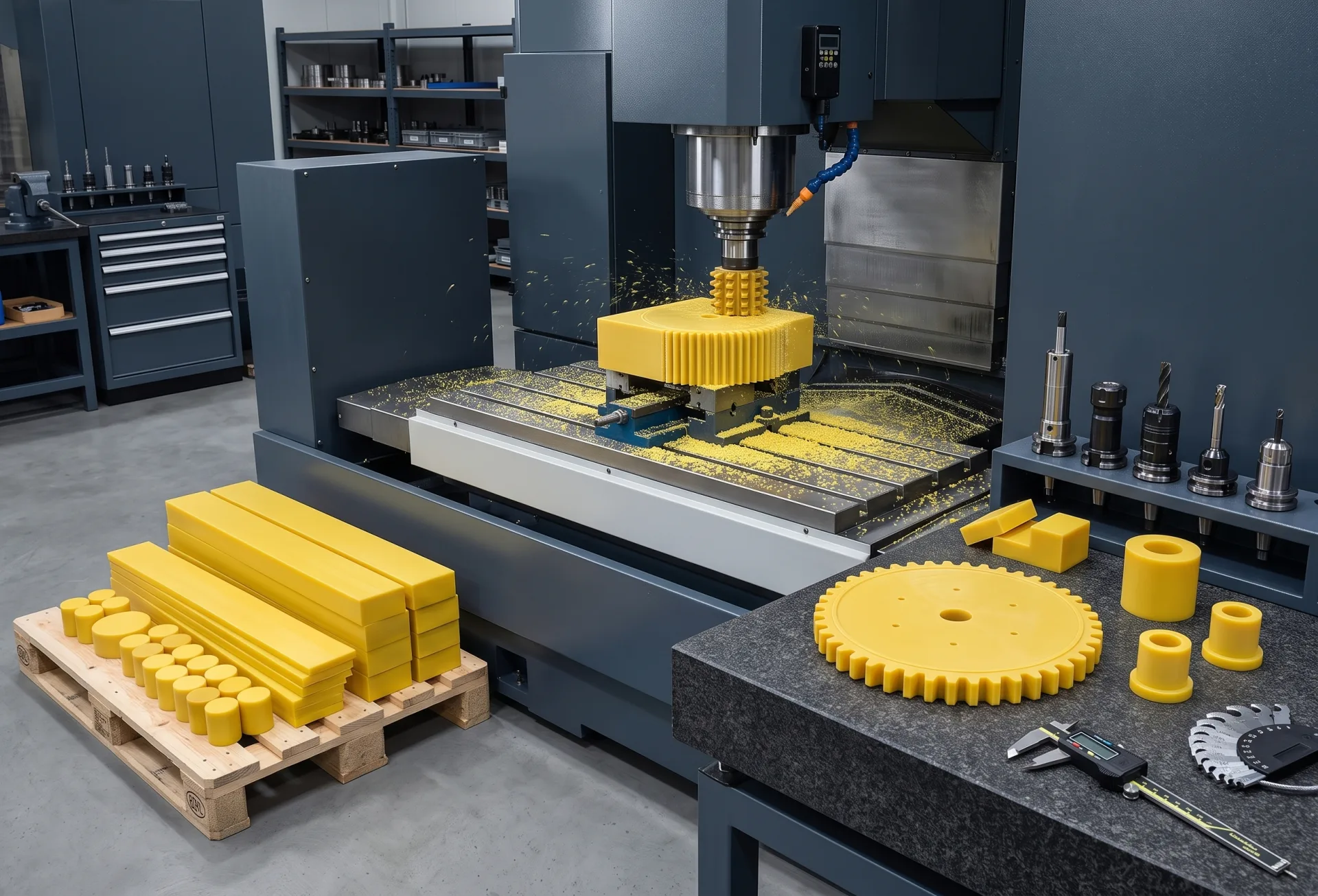
01 · Engineering Plastics
Components that Guide Motion and Protect Surfaces
Engineering plastics are used where low friction, wear resistance, impact strength, chemical compatibility or reduced weight is required.
- Slide pads and guide rails
- Wear strips and protective plates
- Bushings and rollers
- Liners and application-specific parts
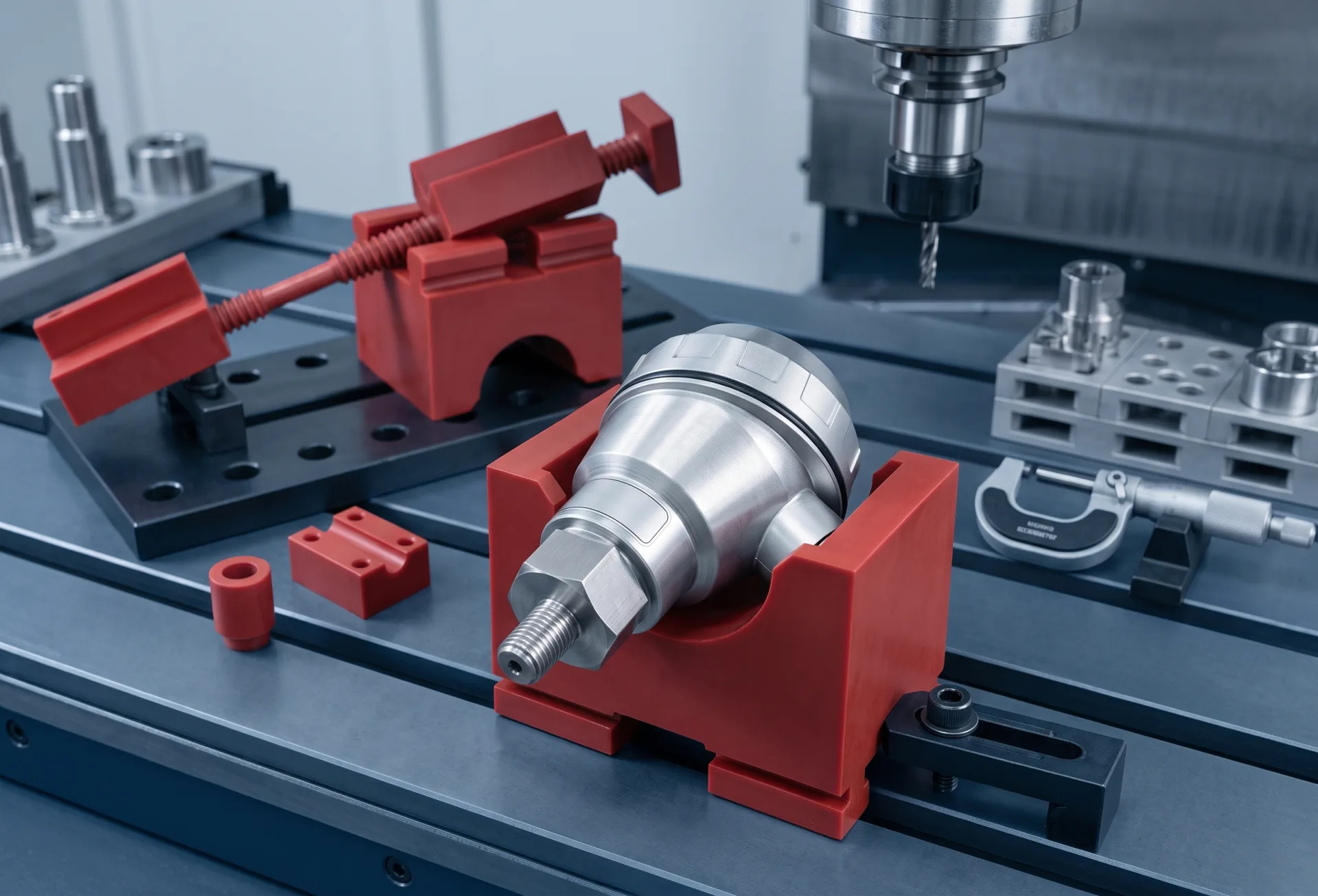
02 · Metal Components
Parts Machined from Drawings or Samples
Machine parts, fastening elements and production fixtures are machined from technical drawings, 3D models or physical samples.
Where required, metal supports and plastic contact and protection elements can be manufactured as a compatible set.
Material Selection
Function-Driven Material Selection
Material selection is based on load, friction, impact, temperature, chemical contact, dimensional stability and expected service life.
01
HDPE
High chemical resistance for liners, panels and protective components.
02
PA and PA6G
For load-bearing parts requiring mechanical strength and wear resistance.
03
POM / Acetal / Delrin
For precision-machined parts requiring rigidity and dimensional stability.
04
PTFE / Teflon
For applications requiring low friction and chemical resistance.
05
PU / Polyurethane
For elastic, impact- and wear-resistant protective components.
06
UHMWPE
For parts requiring low friction with high impact and wear resistance.
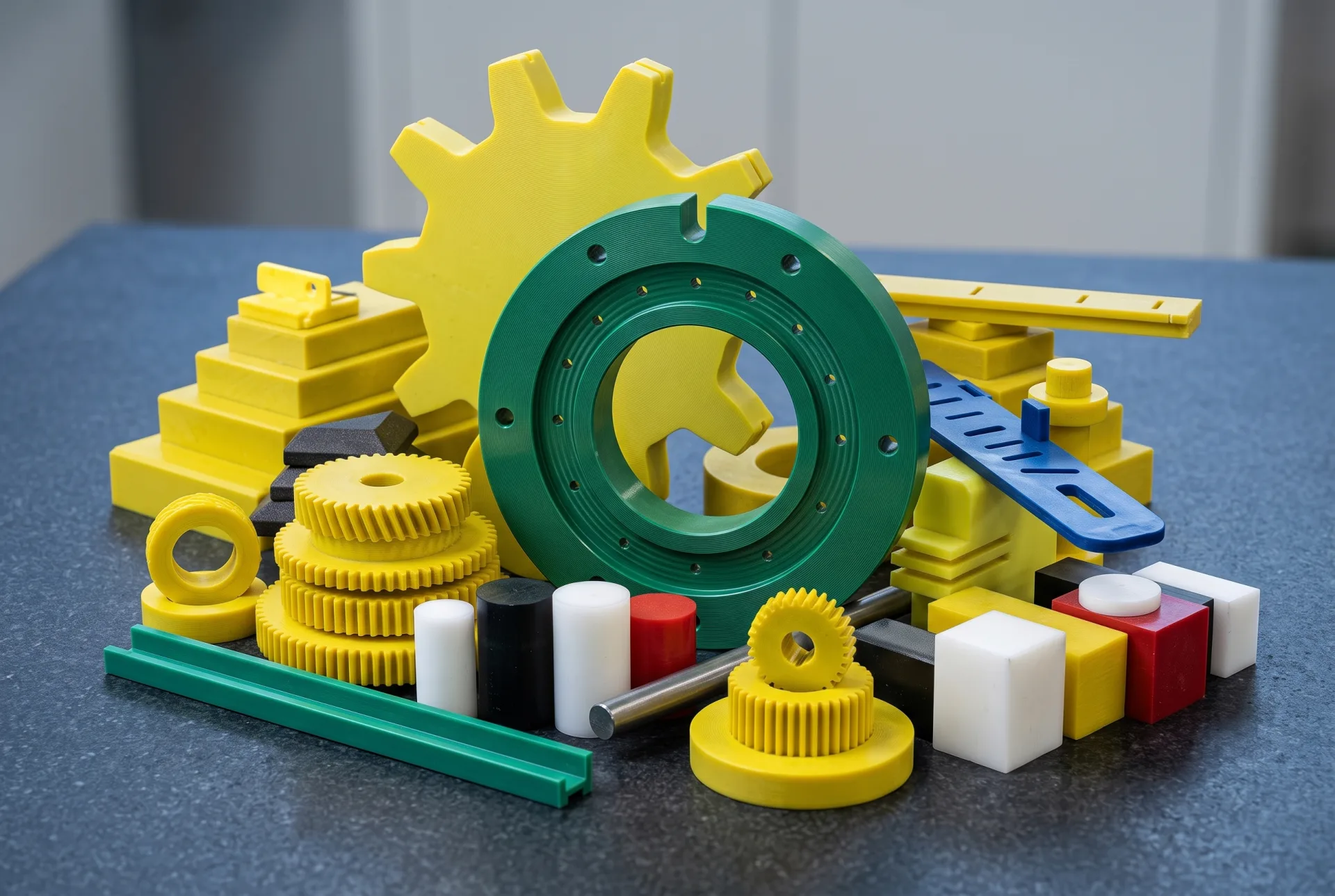
Combined Components
Plastic and Metal Components Can Be Manufactured Together
The friction and protection functions of plastic parts can complement the load-bearing and fastening functions of metal parts within the same assembly.
Mating surfaces, connections and installation dimensions are evaluated together for both material groups.
Technical Requirements
Bring the Part into Production
A technical drawing, 3D file, sample or application information can be provided. Suitable material, design requirements and manufacturing method are identified during the initial review.